

House Dust Mite Allergy Market In 2029
House Dust Mite Allergy Market Report
House Dust Mite Allergy Market Report
House Dust Mite Allergy Market Report
The Business Research Company’s House Dust Mite Allergy Global Market Report 2025 – Market Size, Trends, And Forecast 2025-2034
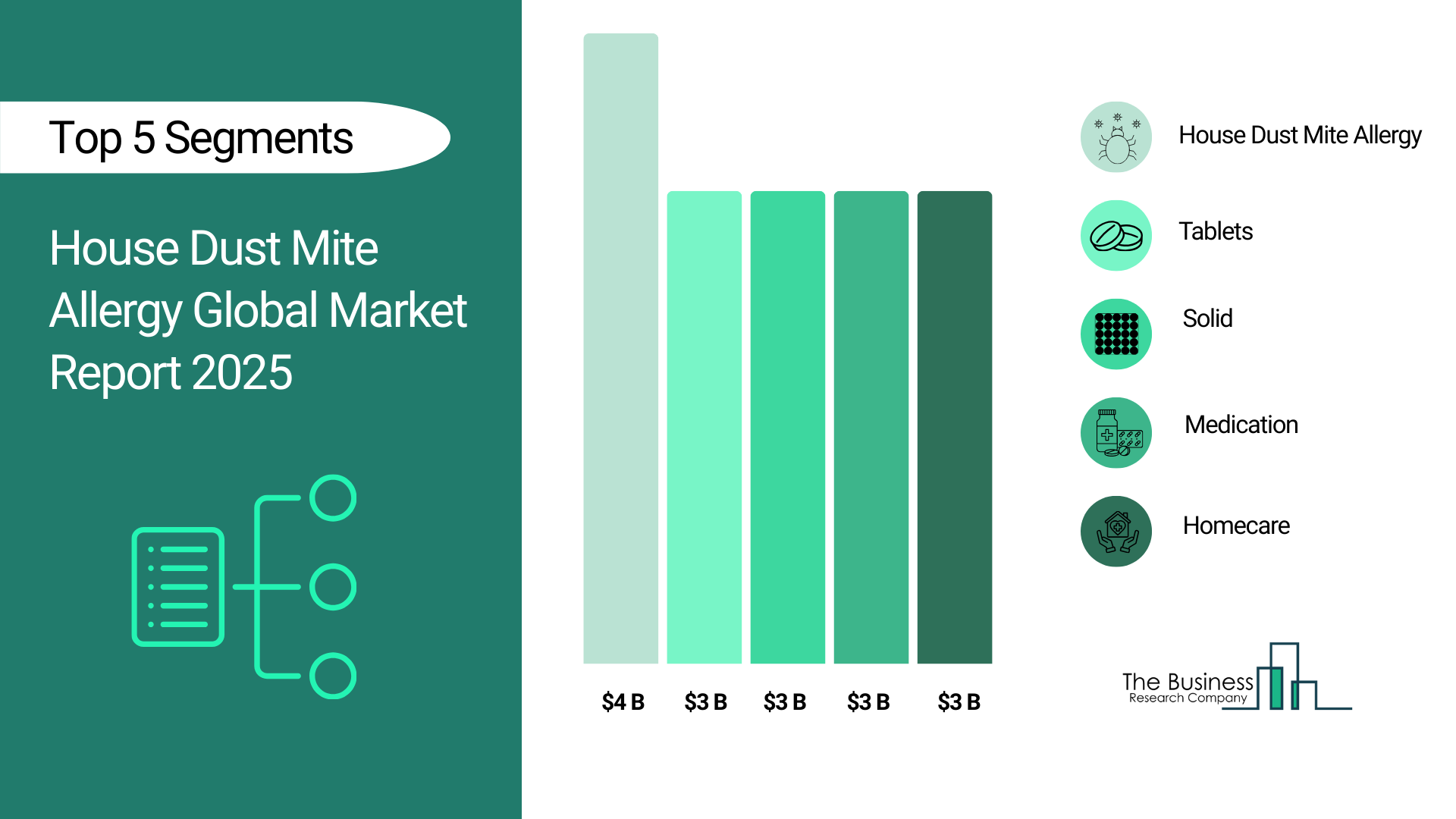
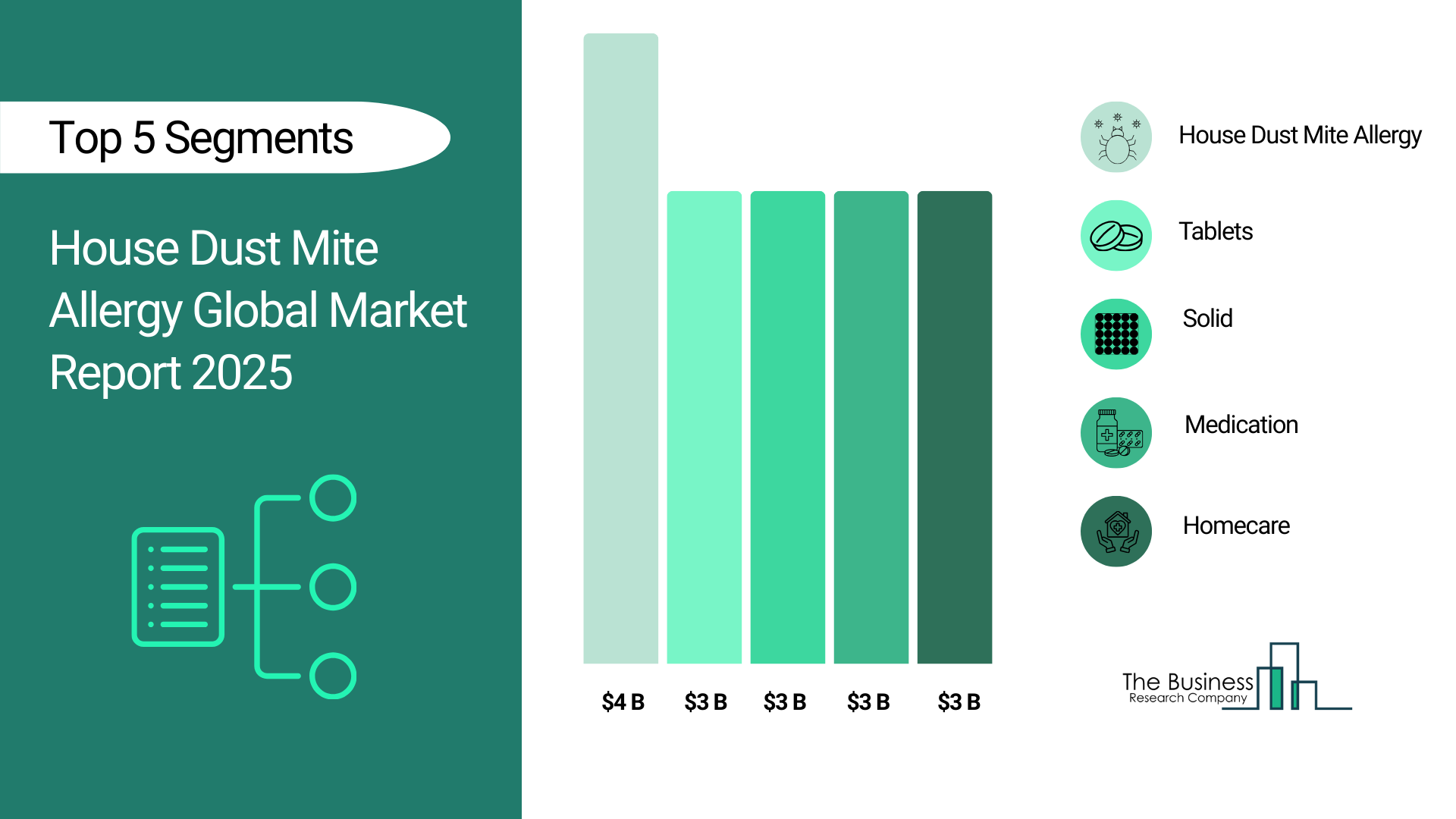
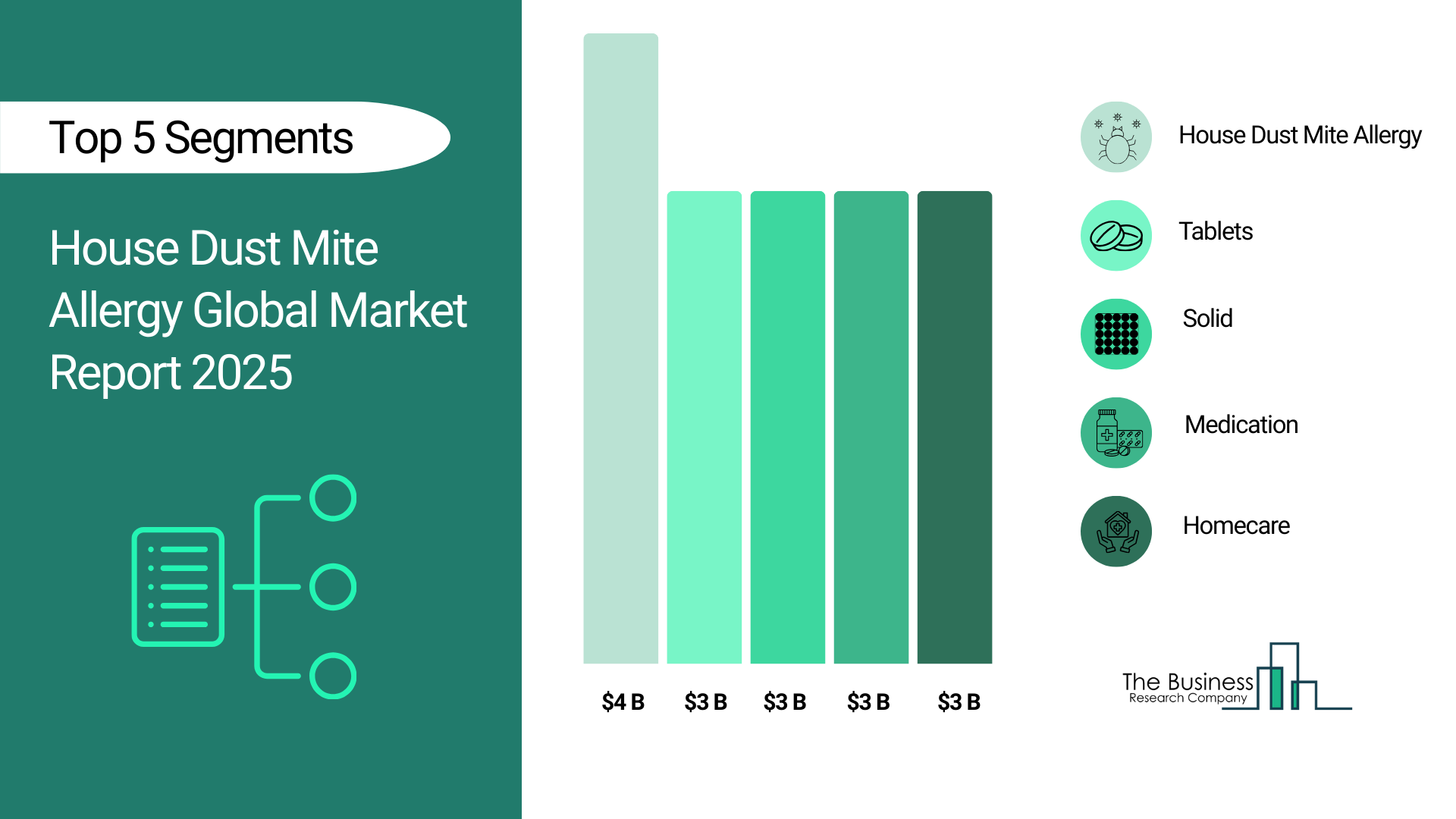
LONDON, GREATER LONDON, UNITED KINGDOM, December 11, 2025 /EINPresswire.com/ -- House Dust Mite Allergy Market to Surpass $4 billion in 2029. In comparison, the Allergy Diagnostics market, which is considered as its parent market, is expected to be approximately $12 billion by 2029, with House Dust Mite Allergy to represent around 33% of the parent market. Within the broader Medical Equipment industry, which is expected to be $1,112 billion by 2029, the House Dust Mite Allergy market is estimated to account for nearly 0.4% of the total market value.
Which Will Be the Biggest Region in the House Dust Mite Allergy Market in 2029
The Asia-Pacific will be the largest region in the house dust mite allergy market in 2029, valued at $1,419 million. The market is expected to grow from $667 million in 2024 at a compound annual growth rate (CAGR) of 16%. The rapid growth can be attributed the rising asthma prevalence, increasing pet ownership and rising healthcare expenditure.
Which Will Be The Largest Country In The Global House Dust Mite Allergy Market In 2029?
The USA will be the largest country in the house dust mite allergy market in 2029, valued at $1,301 million. The market is expected to grow from $704 million in 2024 at a compound annual growth rate (CAGR) of 13%. The rapid growth can be attributed to the rising asthma prevalence, surge in pet ownership and rising healthcare expenditure.
Request a free sample of the House Dust Mite Allergy Market Report
https://www.thebusinessresearchcompany.com/sample_request?id=9304&type=smp
What will be Largest Segment in the House Dust Mite Allergy Market in 2029?
The house dust mite allergy market is segmented by product type into tablets, nasal drops and injectable. The tablets market will be the largest segment of the house dust mite allergy market segmented by product type, accounting for 78% or $3,106 million of the total in 2029. The tablets market will be supported by increasing preference for convenient oral therapies, rising prevalence of allergic rhinitis and asthma triggered by dust mites, growing awareness of allergen immunotherapy, and the availability of standardized sublingual and oral tablet formulations.
The house dust mite allergy market is segmented by treatment type into medication, nasal irrigation and other types. The medication market will be the largest segment of the house dust mite allergy market segmented by treatment type, accounting for 76% or $3,029 million of the total in 2029. The medication market will be supported by the widespread use of antihistamines, corticosteroids, and decongestants for symptom management, increasing accessibility to over-the-counter and prescription drugs, rising awareness of allergy treatment options, and continuous innovation in fast-acting and long-lasting formulations.
The house dust mite allergy market is segmented by diagnosis into skin prick test (SPT), specific immunoglobulin E (LGE) blood test and other diagnosis. The skin prick test (SPT) market will be the largest segment of the house dust mite allergy market segmented by diagnosis, accounting for 60% or $2,413 million of the total in 2029. The skin prick test (SPT) market will be supported by its widespread use as a reliable, quick, and cost-effective diagnostic method, increasing awareness of early allergy detection, growing availability of standardized allergen extracts, and its strong clinical accuracy in identifying immediate hypersensitivity reactions.
The house dust mite allergy market is segmented by dosage forms into solid and liquid. The solid market will be the largest segment of the house dust mite allergy market segmented by dosage, accounting for 78% or $3,106 million of the total in 2029. The solid market will be supported by the increasing demand for convenient and easy-to-administer treatments, growing preference for tablet and capsule formulations, enhanced patient compliance due to the simplicity of solid dosage forms, and the development of more effective and targeted allergen-specific therapies.
The house dust mite allergy market is segmented by end users into hospitals, homecare, specialty clinics and other end users. The homecare market will be the largest segment of the house dust mite allergy market segmented by end users, accounting for 68% or $2,704 million of the total in 2029. The homecare market will be supported by the growing preference for at-home management of mild to moderate allergy symptoms, rising demand for self-administered treatments like nasal sprays and immunotherapy, increased awareness of home-based allergen reduction strategies, and the availability of user-friendly devices for allergy relief at home.
What is the expected CAGR for the House Dust Mite Allergy Market leading up to 2029?
The expected CAGR for the house dust mite allergy market leading up to 2029 is 15%
What Will Be The Growth Driving Factors In The Global House Dust Mite Allergy Market In The Forecast Period?
The rapid growth of the global house dust mite allergy market leading up to 2029 will be driven by the following key factors that are expected to reshape allergy diagnosis, immunotherapy development, and respiratory health management across global healthcare systems.
Rising Air Pollution Levels- The increasing emphasis on air pollution levels will become a key driver of growth in the house dust mite allergy market by 2029. Air pollution, especially particulate matter (PM2.5 and PM10), can increase allergens by attaching to dust particles, which are carried indoors and mix with dust mites and their waste. In highly polluted areas, people often keep windows closed to block out outdoor contaminants, leading to a buildup of allergens indoors. Poor ventilation and rising humidity further promote dust mite growth. Additionally, air conditioning and heating systems, if not regularly cleaned or fitted with effective filters, circulate both pollutants and allergens, worsening allergy symptoms. As a result, the growing deployment of air pollution levels is anticipated to contributing to a 1.5% annual growth in the market.
Increasing Prevalence Of Allergic Diseases- The growing focus on allergic diseases will emerge as a major factor driving the expansion of the house dust mite allergy market by 2029. The increasing number of individuals suffering from allergic conditions related to house dust mites (HDM), such as allergic rhinitis, asthma and eczema, is driving demand for diagnostic tools and treatments like immunotherapy, antihistamines and nasal sprays. This uptick in allergies is prompting healthcare providers and companies to emphasize prevention and management strategies, including educational initiatives, lifestyle adjustments and the development of new therapies. Moreover, as allergies become more widespread, consumer demand for hypoallergenic products, such as dust mite sprays, air purifiers and bedding covers, is growing, further expanding the market for HDM-related solutions. Consequently, the accelerating adoption of allergic diseases capabilities is projected to contributing to a 1% annual growth in the market.
Changing Climate Patterns- The expanding integration of climate patterns processes will serve as a key growth catalyst for the house dust mite allergy market by 2029. Climate change is driving higher temperatures and increased humidity, creating more favorable conditions for house dust mites. As these changes occur, regions previously inhospitable to mites, particularly in northern climates, are now seeing growing populations. This shift broadens the market for allergy treatments. Furthermore, extreme weather events like floods and heavy rainfall can elevate indoor humidity, fostering damp conditions ideal for dust mite proliferation. As a result, areas affected by frequent severe weather may experience a rise in allergies, increasing demand for related treatments. Therefore, this growing integration of climate patterns operations is projected to supporting to a 0.8% annual growth in the market.
Favorable Government Initiatives- The increasing emphasis on government initiatives will become a significant driver contributing to the growth of the house dust mite allergy market by 2029. Governments are investing in awareness campaigns to educate the public about house dust mite allergies, which increases demand for allergy treatments and healthcare services. They also fund research to improve diagnosis, treatment options and preventive measures. In emerging markets, investments in healthcare infrastructure provide greater access to medical services, resulting in higher diagnosis rates and an increased demand for allergy testing and treatments. Consequently, the rising adoption of government initiatives strategies is projected to contributing to a 0.5% annual growth in the market.
Access the detailed House Dust Mite Allergy Market report here:
https://www.thebusinessresearchcompany.com/report/house-dust-mite-allergy-global-market-report
What Are The Key Growth Opportunities In The House Dust Mite Allergy Market in 2029?
The most significant growth opportunities are anticipated in the house dust mite allergy tablets market market, the house dust mite allergy in solid dosage market, the house dust mite allergy medication market, the house dust mite allergy at homecare market and the skin prick test (SPT) for house dust mite allergy market. Collectively, these segments are projected to contribute over $7 billion in market value by 2029, driven by rising allergy prevalence, growing demand for convenient immunotherapy options, increasing adoption of at-home diagnostic and treatment solutions, and advancements in allergen-specific immunotherapy formulations. This surge highlights the expanding role of personalized medicine, improved patient compliance, and technological innovation in allergy management, fueling transformative growth within the broader house dust mite allergy tablets market.
The house dust mite allergy tablets market is projected to grow by $1,505 million, the house dust mite allergy in solid dosage market by $1,505 million, the house dust mite allergy medication market by $1,458 million, the house dust mite allergy at homecare market by $1,344 million and the skin prick test (SPT) for house dust mite allergy market by $1,142 million over the next five years from 2024 to 2029.
Learn More About The Business Research Company
The Business Research Company (www.thebusinessresearchcompany.com) is a leading market intelligence firm renowned for its expertise in company, market, and consumer research. We have published over 17,500 reports across 27 industries and 60+ geographies. Our research is powered by 1,500,000 datasets, extensive secondary research, and exclusive insights from interviews with industry leaders.
We provide continuous and custom research services, offering a range of specialized packages tailored to your needs, including Market Entry Research Package, Competitor Tracking Package, Supplier & Distributor Package and much more.
Disclaimer: Please note that the findings, conclusions and recommendations that TBRC Business Research Pvt Ltd delivers are based on information gathered in good faith from both primary and secondary sources, whose accuracy we are not always in a position to guarantee. As such TBRC Business Research Pvt Ltd can accept no liability whatever for actions taken based on any information that may subsequently prove to be incorrect. Analysis and findings included in TBRC reports and presentations are our estimates, opinions and are not intended as statements of fact or investment guidance.
Contact Us:
The Business Research Company
Americas +1 310-496-7795
Europe +44 7882 955267
Asia & Others +44 7882 955267 & +91 8897263534
Email: info@tbrc.info
Follow Us On:
LinkedIn: https://in.linkedin.com/company/the-business-research-company
Oliver Guirdham
The Business Research Company
+44 7882 955267
info@tbrc.info
Visit us on social media:
LinkedIn
Facebook
X
Legal Disclaimer:
EIN Presswire provides this news content "as is" without warranty of any kind. We do not accept any responsibility or liability for the accuracy, content, images, videos, licenses, completeness, legality, or reliability of the information contained in this article. If you have any complaints or copyright issues related to this article, kindly contact the author above.
